
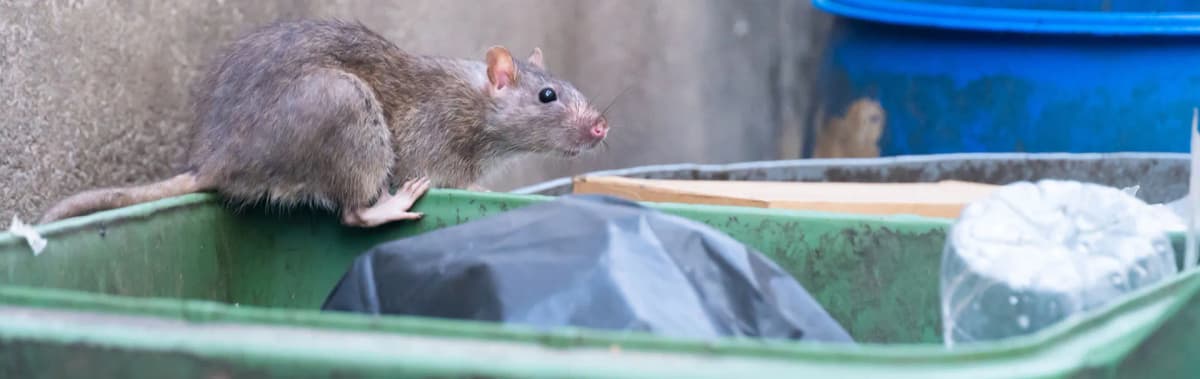
Rat Control in Kent
Rats in a Kent property are treated by GEM Services with a 4-stage process: survey and entry point identification, baiting programme, monitoring visits, proofing and prevention. How long it takes depends on the size of the infestation and how the rats are getting in. Treatment is carried out by a technician from a BPCA member company, with a free, no-obligation quote before any treatment starts, and callouts peak in autumn and winter.
What you are dealing with: rats
Species we most often treat in Kent: Rattus norvegicus (brown rat)
The brown rat is the most common species in the UK. A female produces several litters a year, and young rats reach breeding age within weeks of birth. That is why a small problem can become a serious infestation within months.
Rats are nocturnal and cautious. They follow the same routes repeatedly, leaving greasy rub marks along walls and skirting boards. They are neophobic, suspicious of new objects in their environment, which is why DIY traps often fail. They can swim, climb, and gnaw through plastic, wood, and even soft metals.
Rats are omnivores and will eat almost anything: cereals, meat, pet food, bird seed, and food waste. They need a daily water source. They prefer to nest in warm, undisturbed areas close to food and water, which is why kitchens, outbuildings, and drains are common hotspots.
Where we usually find rats on a property
- ✓Wall cavities and behind plasterboard
- ✓Loft spaces, especially in insulation
- ✓Under garden sheds and decking
- ✓Inside compost heaps
- ✓Beneath floorboards near kitchen pipework
- ✓In and around damaged drainage systems
Rat treatment at a glance
| Pest treated | Rats (Rattus norvegicus (brown rat)) |
|---|---|
| Peak season | Autumn and Winter |
| How long it takes | How long it takes depends on the size of the infestation and how the rats are getting in. A baiting programme always needs more than one visit. |
| Visits usually needed | 4-stage process, carried out over one or more visits depending on how far the problem has spread |
| How urgent | Treat promptly. Delay makes this materially worse and more expensive. |
| When you call | Rats in a kitchen, near stored food or in a business are the details to give first when you call, because they decide how the visit is planned. |
| Area covered | Kent and East Sussex, from our base in Ashford |
| Safety | Carried out by a technician from a BPCA member company, fully insured. We tell you which areas to keep children and pets out of, and for how long, before we start. |
| What it costs | The price depends on the pest, the size of the property and how far the infestation has spread. No call-out fee. Free, no-obligation quote before any treatment starts: call 07400 372204. |
Signs you have rats
Catching the problem early decides how much of it there is to treat. These are what we look for on arrival, and what is worth checking before you call.
Droppings along edges and behind appliances
Rat droppings are dark brown, pellet-shaped, and about 10-14mm long. A single rat leaves a great many of them overnight, usually concentrated along its regular routes.
Gnaw marks on wood, plastic, or cables
Rats must gnaw constantly to keep their teeth worn down. Look for bite marks on skirting boards, door frames, food packaging, and electrical cables. Gnawed wiring is a serious fire risk.
Scratching noises at night
Rats moving through wall cavities, under floorboards, or in loft insulation produce scratching and scurrying sounds, most noticeable after dark when the house is quiet.
Greasy smear marks along walls
Rats have oily fur and follow the same paths repeatedly. Over time this leaves dark, greasy streak marks along walls, skirting boards, and around entry holes.
Burrow holes outside the property
Rat burrow entrances are roughly 6-9cm in diameter, often found at the base of walls, under sheds, beside compost bins, or in overgrown garden borders.
How we treat rats, step by step
Every job follows this sequence. What changes between properties is how long each stage takes, not the order.
- 1
Survey and entry point identification
We inspect the property inside and out to map the extent of the infestation and identify exactly how rats are getting in: gaps under doors, broken air bricks, damaged drain covers, or holes around pipes.
- 2
Baiting programme
We place tamper-resistant bait stations in strategic locations along known rat routes. Professional rodenticide is far more effective than shop-bought products and is secured in locked stations to protect children and pets.
- 3
Monitoring visits
We return to check bait take, assess activity levels, and adjust the programme as needed. How many visits it takes depends on how the activity responds.
- 4
Proofing and prevention
Once the infestation is cleared, we seal entry points with galvanised wire mesh, expanding foam, or cement. This prevents reinfestation: without proofing, new rats will find the same routes.
How long it takesHow long it takes depends on the size of the infestation and how the rats are getting in. A baiting programme always needs more than one visit.
What rats cost you if they are left
Rats in a home contaminate food preparation areas with droppings and urine, gnaw through electrical wiring creating a fire hazard, and damage insulation and pipework in loft spaces. The noise, smell, and health risk cause significant stress for families.
A rat sighting in a restaurant, hotel, or food premises can lead to immediate closure by Environmental Health. Businesses risk prosecution, fines, and devastating reputational damage. Warehouses and retail premises lose stock to contamination and gnaw damage.
Health risks
- ⚠Leptospirosis (Weil's disease), spread through rat urine, potentially fatal
- ⚠Salmonella, spread through droppings contaminating food surfaces
- ⚠Hantavirus, rare in the UK but carried by rodents
- ⚠Rat-bite fever, from bites or scratches
Damage to the property
- ⚠Gnawed electrical wiring, a leading cause of house fires
- ⚠Damaged water pipes causing leaks
- ⚠Shredded loft insulation reducing energy efficiency
- ⚠Contaminated food stores
- ⚠Structural damage from burrowing under foundations
When rat problems peak in Kent
Rat activity indoors increases sharply from October onwards as temperatures drop and food becomes scarcer outside. They seek warmth and shelter in buildings throughout winter. Spring brings a surge in breeding activity.
Keeping rats out after treatment
Treatment clears what is there now. These are what stop it coming back, and they are worth doing whether or not you use us.
- ✓Keep food in sealed containers. Never leave pet food out overnight.
- ✓Fix dripping taps and pipes. Rats need daily water access.
- ✓Seal gaps larger than 15mm around pipes, doors, and air bricks with wire mesh or metal kick plates.
- ✓Keep gardens tidy: clear overgrown areas, move compost bins away from buildings, and cut back vegetation touching walls.
- ✓Ensure drain covers are intact and check for damaged or collapsed drains, a common rat entry route.
When you do not need us
A single rat sighting outdoors, away from the building and with none of the signs above, is usually not an infestation and does not need a treatment. Work through the prevention points first and see whether the activity continues.
Where this does need acting on quickly is anything indoors, anything near a doorway or a room in daily use, and any sign of an established nest or colony. Rats problems of that kind get harder and more expensive the longer they run.
We also do not carry out structural repairs. We seal and proof the entry points we find, but where the fabric of the building needs rebuilding, that is a builder’s job and we will say so.
We do not carry out deep cleans, and we do not deal with foxes. We do not treat Asian hornets either: the government deals with those, so report a suspected sighting through the Asian Hornet Watch app.
Rat Control across Kent
We provide rat control across Kent and East Sussex. Find your local Kent area below.
View All Coverage Areas →Rats treatment: common questions
How do rats get into my house?
The most common entry points are gaps around pipes, damaged air bricks, broken drain covers, and spaces under doors. Rats can squeeze through a gap as small as 15mm, roughly the width of your thumb.
Why don't shop-bought rat traps work?
Rats are neophobic: they avoid new objects in their environment. A snap trap placed in the open will often be ignored for days or weeks. Professional bait stations are placed along established rat runs and use more effective rodenticide.
How long does it take to get rid of rats?
It depends on the size of the infestation and how the rats are getting in. A professional baiting programme needs more than one visit: we return to monitor bait take and adjust the treatment as activity reduces.
Will you block the entry points?
Yes. Proofing is a key part of our service. After clearing the infestation, we seal all identified entry points with galvanised wire mesh, metal plates, or cement to prevent rats returning.
Are rat droppings dangerous?
Yes. Rat droppings and urine can carry leptospirosis, salmonella, and other harmful bacteria. Avoid sweeping droppings (this spreads dust particles). Instead, spray with disinfectant and wipe up with disposable gloves.
Is there a smell with a rat infestation?
A heavy rat infestation produces a distinct, stale ammonia smell from accumulated urine. If a rat dies in a wall cavity or under floorboards, the decomposition smell can be very strong for 2-3 weeks.
Book rat control in Kent
Rats problems do not resolve on their own, and the longer an infestation runs the more of the property it reaches.
Rats in a kitchen, near stored food or in a business are the details to give first when you call, because they decide how the visit is planned.
Same-day visits are sometimes possible, depending on the diary.
How long it takes depends on the size of the infestation and how the rats are getting in. A baiting programme always needs more than one visit.
We cover Kent and East Sussex from our base in Ashford. Treatments are carried out by a technician from a BPCA member company, and we are fully insured.
The next step is a phone call.
Tell us what you have seen and where. We will tell you what treating it involves, and the quote is free, with no obligation, before any treatment starts.
Call 07400 372204Cannot talk right now? Send us the details instead and we will call you back.
Not sure it needs treatment yet? When to call a pest controller and when to wait