
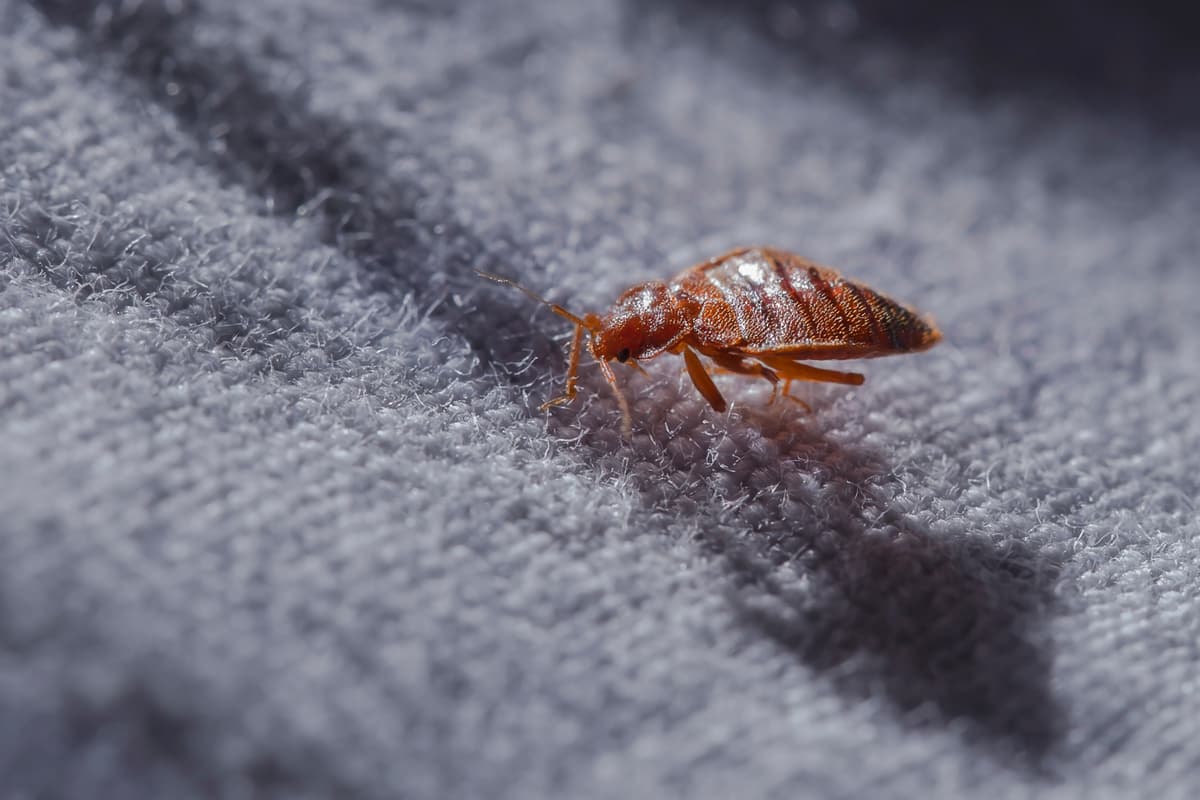
Bed Bug Treatment in Kent
Bed Bugs in a Kent property are treated by GEM Services with a 4-stage process: detailed inspection, insecticidal spray treatment, second treatment visit, post-treatment advice. Bed bug treatment always takes at least two visits, spaced to catch the eggs that hatch after the first. Treatment is carried out by a technician from a BPCA member company, with a free, no-obligation quote before any treatment starts, and callouts peak in summer and autumn.
What you are dealing with: bed bugs
Species we most often treat in Kent: Cimex lectularius
Bed bugs are small, flat, oval insects about 5mm long, roughly the size of an apple seed. They feed exclusively on blood, usually at night. A female lays eggs daily and a great many over her lifetime. Eggs hatch within days, and nymphs reach adulthood in a matter of weeks with regular feeding.
Bed bugs are nocturnal and hide during the day in seams, crevices, and folds close to where people sleep. They are attracted by body heat and carbon dioxide. They can survive several months without feeding, which makes them extremely persistent and difficult to starve out.
Bed bugs feed exclusively on human blood (occasionally pets). They bite exposed skin during sleep, feeding for a few minutes before retreating to their hiding spot. They are not attracted by dirt: even the cleanest homes and hotels can get bed bugs. They spread through luggage, clothing, and second-hand furniture.
Where we usually find bed bugs on a property
- ✓Mattress seams and piping
- ✓Bed frame joints and headboard crevices
- ✓Bedside table drawers and screw holes
- ✓Behind skirting boards near the bed
- ✓Inside electrical sockets near sleeping areas
- ✓In the folds of curtains close to the bed
Bed bug treatment at a glance
| Pest treated | Bed Bugs (Cimex lectularius) |
|---|---|
| Peak season | Summer and Autumn |
| How long it takes | Bed bug treatment always takes at least two visits, spaced to catch the eggs that hatch after the first. How long it takes overall depends on how far the infestation has spread. |
| Visits usually needed | 4-stage process, carried out over one or more visits depending on how far the problem has spread |
| How urgent | Treat promptly. Delay makes this materially worse and more expensive. |
| When you call | Bed bug treatment is not an emergency callout. It always takes at least two visits, spaced to catch the eggs that hatch after the first. |
| Area covered | Kent and East Sussex, from our base in Ashford |
| Safety | Carried out by a technician from a BPCA member company, fully insured. We tell you which areas to keep children and pets out of, and for how long, before we start. |
| What it costs | The price depends on the pest, the size of the property and how far the infestation has spread. No call-out fee. Free, no-obligation quote before any treatment starts: call 07400 372204. |
Signs you have bed bugs
Catching the problem early decides how much of it there is to treat. These are what we look for on arrival, and what is worth checking before you call.
Itchy red bite marks in lines or clusters
Bed bug bites often appear as small, red, itchy welts in a line or cluster on exposed skin: arms, shoulders, neck, and face. Not everyone reacts to bites, so absence of bites does not mean absence of bugs.
Small dark spots on bedding
Bed bug excrement leaves tiny dark brown or black spots on sheets, mattresses, and pillowcases. These spots bleed into fabric when dampened.
Blood smears on sheets
Crushing a recently fed bed bug in your sleep leaves small reddish-brown blood smears on the sheets.
Shed skins and eggs in mattress seams
Bed bugs moult several times before reaching adulthood. Translucent shed skins and tiny white eggs (1mm long) accumulate in mattress seams, headboard joints, and bed frame crevices.
Sweet, musty odour
A heavy bed bug infestation produces a distinctive sweet, sickly smell from their scent glands. This is often described as similar to coriander or mouldy raspberries.
How we treat bed bugs, step by step
Every job follows this sequence. What changes between properties is how long each stage takes, not the order.
- 1
Detailed inspection
We thoroughly examine the bed frame, mattress, headboard, bedside furniture, and surrounding areas. Bed bugs hide in surprisingly narrow crevices. We know where to look.
- 2
Insecticidal spray treatment
We apply a residual insecticide to all harbourage areas. This kills bugs on contact and continues working for weeks as hidden bugs emerge to feed.
- 3
Second treatment visit
A follow-up treatment, timed to catch the nymphs that hatch from eggs that survived the first visit, is essential. Eggs are resistant to most insecticides.
- 4
Post-treatment advice
We advise on washing bedding at 60°C, using mattress encasements, and monitoring for any residual activity over the following weeks.
How long it takesBed bug treatment always takes at least two visits, spaced to catch the eggs that hatch after the first. How long it takes overall depends on how far the infestation has spread.
What bed bugs cost you if they are left
Bed bugs cause intense psychological distress: the anxiety of being bitten in your own bed, sleep disruption, and the stigma associated with an infestation. Bites cause itching and discomfort, and heavy scratching can lead to secondary skin infections.
Hotels, B&Bs, and hostels face devastating reviews and compensation claims from guests bitten by bed bugs. Care homes and student accommodation require rapid, discreet treatment to prevent spread between rooms.
Health risks
- ⚠Itchy bite reactions causing discomfort and sleep loss
- ⚠Secondary skin infections from excessive scratching
- ⚠Psychological distress, anxiety, and insomnia
- ⚠Allergic reactions in sensitive individuals
Damage to the property
- ⚠Staining on mattresses and bedding from excrement and blood
- ⚠Bed bugs can spread to adjacent rooms through wall voids and electrical outlets if untreated
When bed bug problems peak in Kent
Bed bug activity increases in summer when warmer temperatures speed up breeding. There is also a spike after holiday season as travellers unknowingly bring bed bugs home in luggage from hotels and hostels.
Keeping bed bugs out after treatment
Treatment clears what is there now. These are what stop it coming back, and they are worth doing whether or not you use us.
- ✓Inspect hotel beds before unpacking when travelling. Check mattress seams and headboard joints.
- ✓Keep luggage on a hard surface (not the bed or carpet) in hotels.
- ✓Wash all clothing at 60°C after returning from trips.
- ✓Be cautious with second-hand furniture, especially mattresses and upholstered items.
- ✓Use mattress encasements to reduce hiding spots and make early detection easier.
When you do not need us
A single bed bug sighting outdoors, away from the building and with none of the signs above, is usually not an infestation and does not need a treatment. Work through the prevention points first and see whether the activity continues.
Where this does need acting on quickly is anything indoors, anything near a doorway or a room in daily use, and any sign of an established nest or colony. Bed Bugs problems of that kind get harder and more expensive the longer they run.
We also do not carry out structural repairs. We seal and proof the entry points we find, but where the fabric of the building needs rebuilding, that is a builder’s job and we will say so.
We do not carry out deep cleans, and we do not deal with foxes. We do not treat Asian hornets either: the government deals with those, so report a suspected sighting through the Asian Hornet Watch app.
Bed Bug Treatment across Kent
We treat bed bug treatment throughout Kent, for homes and businesses. There are local pages for Ashford, Dartford and Sevenoaks.
View All Coverage Areas →Bed Bugs treatment: common questions
Do I need to throw away my mattress?
Usually not. Professional insecticidal treatment is effective at clearing bed bugs from mattresses. A mattress encasement after treatment seals in any remaining bugs. We only recommend replacing a mattress if it is heavily infested and in poor condition.
How did I get bed bugs?
Bed bugs are hitchhikers. They travel in luggage, clothing, and second-hand furniture. A stay in an infested hotel, a house guest, or a used sofa are all common sources. Bed bugs are not caused by poor hygiene.
Why are two treatments needed?
Bed bug eggs are resistant to most insecticides. The first treatment kills all live bugs, but eggs hatch over the following 7-14 days. The second treatment catches these newly hatched nymphs before they can breed.
Can bed bugs spread to other rooms?
Yes. If left untreated, bed bugs will spread along wall voids, through electrical conduits, and on clothing to adjacent rooms. Early treatment prevents this from happening.
Do bed bugs carry diseases?
Bed bugs are not known to transmit diseases. Their main impact is the discomfort from bites, sleep disruption, and the significant psychological distress they cause.
Can I treat bed bugs myself?
Over-the-counter sprays rarely work on bed bugs and can scatter them to new hiding spots, making the problem worse. Professional treatment with residual insecticides and a follow-up visit is the reliable way to clear an infestation.
Book bed bug treatment in Kent
Bed Bugs problems do not resolve on their own, and the longer an infestation runs the more of the property it reaches.
Bed bug treatment is not an emergency callout. It always takes at least two visits, spaced to catch the eggs that hatch after the first.
Bed bug treatment always takes at least two visits, spaced to catch the eggs that hatch after the first. How long it takes overall depends on how far the infestation has spread.
We cover Kent and East Sussex from our base in Ashford. Treatments are carried out by a technician from a BPCA member company, and we are fully insured.
The next step is a phone call.
Tell us what you have seen and where. We will tell you what treating it involves, and the quote is free, with no obligation, before any treatment starts.
Call 07400 372204Cannot talk right now? Send us the details instead and we will call you back.
Not sure it needs treatment yet? When to call a pest controller and when to wait